
Cabinet Painting vs Refacing vs Replacing in Tucson: How to Choose

If your kitchen cabinets look dated, you have three main ways to fix it: paint them, reface them, or tear them out and replace them. All three can make a kitchen feel new, but they solve different problems, take different amounts of time, and land at very different points on the budget scale.
This guide walks through what each option actually involves, the questions that usually decide it, and a few things that matter more in Tucson homes, from heat near the oven to the age of the house. If you already know you want painted cabinets, our guide to caring for painted kitchen cabinets in Tucson's dry climate covers what comes after.
The Three Options at a Glance
Cabinet painting (refinishing)
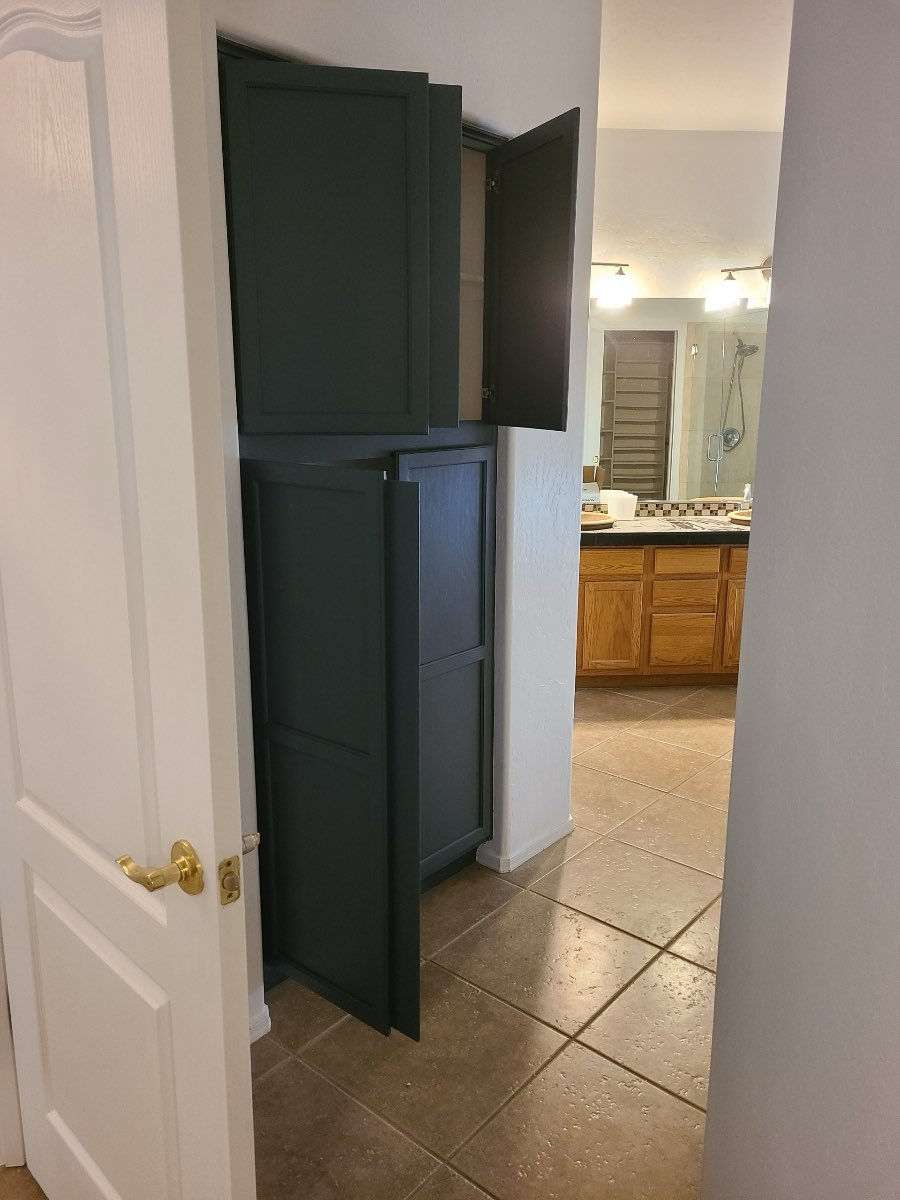
Painting keeps everything you have: the boxes, doors, drawer fronts, and layout. The surfaces are cleaned, degreased, sanded, primed, and painted. The shape of the doors does not change, but the color and finish change completely. Refinishing with a new stain or clear coat follows a similar process.
Cabinet refacing
Refacing keeps the cabinet boxes and the layout but replaces what you see. New doors and drawer fronts go on, and the visible face frames and end panels are covered with a matching veneer or laminate so they blend with the new doors. Hinges and pulls are usually replaced at the same time. Lowe's, for example, describes its standard refacing service as replacing doors, veneers, drawers, slides, hardware, and hinges, while noting that it does not include major cabinet reconstruction, new islands or walls, or plumbing work.
Cabinet replacement
Replacement removes the old cabinets entirely and installs new ones. It is the only option of the three that can change the layout: moving the sink, adding an island, gaining storage, or running cabinets to the ceiling. As Angi points out in its cabinet cost guide, a layout change can also bring flooring, electrical, plumbing, drywall, and tile work. Replacing cabinets also usually means removing the countertops.
Start With the Cabinet Boxes
The first question is not color or budget. It is whether your cabinet boxes are worth keeping. Painting and refacing both depend on the existing boxes, so if those are failing, neither option will hold up for long. Open every door and drawer and look for:
Water damage under the sink. Swollen, soft, or stained particleboard in the sink base is a common weak spot.
Sagging shelves or loose joints. Boxes that rack, wobble, or pull away from the wall are a structural problem, not a cosmetic one.
Drawer and hinge problems. A few worn slides or hinges can be replaced. Widespread problems may point to boxes near the end of their life.
The material itself. Angi notes that refinishing works best on structurally sound, solid-wood cabinets, and that cabinets in poor condition or made of fiberboard or particleboard are often better candidates for replacement.
If the boxes are solid and you like how the kitchen works, painting or refacing is usually on the table. If they are not, replacement is often the better use of your money.
Do You Like Your Layout?
Neither painting nor refacing moves anything. If your kitchen works for how you cook and the storage is adequate, keeping the layout saves a great deal of disruption. If you have been wishing for an island, a wider walkway, deeper drawers, or more counter space, a new finish will not fix that. Settle the layout question before you compare prices.
Do You Like Your Door Style?
This is often the deciding question between painting and refacing. Paint changes the color and sheen, but a raised-panel cathedral door will still be a raised-panel cathedral door afterward. If the door shape itself is what bothers you, refacing gives you new doors (often a simple flat or Shaker style) on the existing boxes. If you like the door profile and just want a lighter, cleaner, or more modern color, painting is usually the simpler path.
Know What Your Cabinets Are Made Of
Many cabinets in Tucson-area homes are solid wood or wood veneer, which generally take paint well with proper prep. Two other materials need a closer look:
Thermofoil. Thermofoil is a thin vinyl film bonded to an MDF core. The Spruce explains that heat, moisture, or both can loosen that bond, and that peeling often shows up above coffee makers, toasters, and ovens. Holiday Kitchens, a cabinet manufacturer, requires heat shields beside ovens, ranges, and dishwashers on its thermofoil products for the same reason. Thermofoil that is still tightly bonded can sometimes be painted with careful scuffing and a bonding primer, but paint will not reattach vinyl that is already lifting. Doors that are peeling are often better refaced or replaced.
Laminate and melamine. These slick, non-porous surfaces need thorough cleaning, scuff sanding, and an adhesion primer. Edges that are chipped or swollen from water are hard to make look new with paint alone.
If you are not sure what you have, look at the back of a door and the inside edge of a drawer front. Wood grain that runs continuously is a good sign. A plastic-feeling film that wraps around the edges usually means thermofoil. Our guide on whether you can paint over polyurethane also explains how clear-coated wood is prepped for paint.
Cost Factors to Compare
We don't publish cabinet prices in this guide because every kitchen is different. National cost guides from Angi generally place painting as the least expensive of the three options and refacing in the middle, while replacement varies the most because it depends on cabinet grade and how much else in the kitchen changes. What moves the number for any option:
Number of doors, drawer fronts, and panels. More pieces means more prep, more coats, and more labor.
Condition and prep. Grease buildup, damaged areas, and slick factory finishes all add prep time, and prep is what makes a painted finish last.
Door style. Detailed raised panels take longer to sand and paint than flat or Shaker doors. For refacing, the door style and material you choose drive much of the cost.
Extras. New hinges, soft-close hardware, pulls, crown molding, or lighting add to any of the three options.
What else changes. With replacement, countertops, backsplash, plumbing, electrical, and flooring can add up quickly.
For more on what drives the price of interior projects in general, see our guide to the cost to paint a house interior in Arizona.
Time and Disruption
Painting is mostly about cleaning, sanding, priming, and dry time. Doors and drawer fronts are usually removed and finished separately, so the kitchen stays partly usable. Refacing adds the lead time for ordering custom-sized doors and drawer fronts, but the installation itself keeps your countertops and plumbing in place. Replacement typically takes the kitchen out of service the longest, since cabinets, countertops, and often the sink and appliances all have to come out and go back in.
Tucson-Specific Things to Keep in Mind
Heat near the oven and in sunny kitchens
Cabinets next to the range, above the coffee maker, or in a west-facing kitchen with strong afternoon sun take more heat than the rest. That is where thermofoil tends to fail first and where finishes see the most wear. If you are refacing or replacing, ask about heat shields beside the oven. If you are painting, make sure any lifting areas are repaired first.
Dry air and wood movement
The USDA Forest Products Laboratory's Wood Handbook notes that interior woodwork in the dry Southwest settles at a lower moisture content than in most of the country. That dry air can make solid wood shrink slightly, especially at the joints of panel doors, and a hairline line of bare wood can show at the panel edge in painted cabinets. It is cosmetic, but it is worth knowing before you choose a dark paint color over light-stained wood. We cover this and other dry-climate care tips in our painted cabinet care guide.
Older homes and lead paint
If your home was built before 1978, the cabinets may have older coatings that contain lead. Under the U.S. EPA's Renovation, Repair and Painting (RRP) Rule, paid work that disturbs more than six square feet of painted surface in a room of pre-1978 housing must be done by an EPA-certified firm using lead-safe work practices. Sanding cabinets for paint counts. If your house is older, ask any contractor about lead testing and lead-safe practices before work begins.
A Quick Way to Decide
Paint if the boxes are solid, you like the layout and door style, and you mainly want a new color or a fresher, more modern look.
Reface if the boxes are solid and you like the layout, but you want a different door style or your doors are damaged, such as peeling thermofoil.
Replace if the boxes are failing, the layout doesn't work, or you are remodeling the whole kitchen anyway, including countertops.
Many homeowners land in between, for example painting the existing boxes and swapping only a few damaged doors. A good contractor should walk through the options with you rather than push a single answer.
Cabinet Painting and Refacing in the Tucson Area
Spahr's Painting offers cabinet painting in Tucson, including kitchen and bathroom cabinet painting, refinishing, staining, and refacing. We also handle interior painting for walls, ceilings, and trim if you are updating the whole room. If you are weighing finishes, our guides to enamel vs acrylic paint and satin paint explain how sheen affects durability and cleaning. We work throughout the area, including Oro Valley, Marana, and Sahuarita. See all of our service areas and services.
Get a Free Cabinet Quote
Not sure whether to paint, reface, or replace? Request a free quote or call (520) 975-2663, and we'll look at your cabinets and walk you through your options.



Comments